

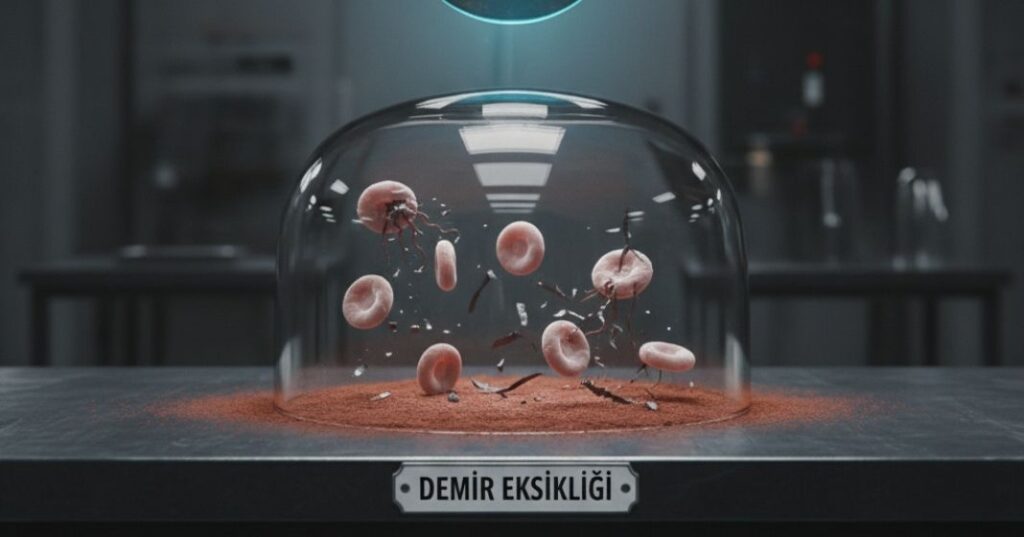
Iron deficiency is a common problem, and it develops quietly. Iron is the core building block of haemoglobin, the protein that carries oxygen in red blood cells. When stores fall, tissues receive less oxygen than they need and the body starts to signal it: tiredness that sleep does not fix, breathlessness on stairs, brittle nails, hair that sheds more than usual.
Many people search for iron deficiency because they want to know whether what they are feeling is normal and how long it lasts. This guide answers that question directly: what the complaints look like in clinical practice, how the condition is diagnosed, what treatment involves and which signs should not wait. In this guide, Uzm. Dr. Ergenekon Karagöz, a specialist in internal medicine, explains iron deficiency from a clinical perspective. It is written for information only; diagnosis and treatment belong to your own doctor.
What is iron deficiency?
Iron deficiency means the body’s iron supply has fallen below what it needs to replace daily losses. The body stores iron mainly as ferritin, and it draws on those stores before anything shows up in a blood count. This is why the first stage, depleted stores without anaemia, can pass unnoticed for months.
When the stores run out, the bone marrow can no longer produce enough healthy red blood cells and iron deficiency anaemia develops. At that point haemoglobin falls, and the symptoms people usually recognise begin. Iron deficiency is not a diagnosis in itself; it is a sign that something is either reducing iron intake and absorption or increasing iron loss. Finding that reason is as important as correcting the level.
What are the symptoms of iron deficiency?
Symptoms vary from person to person and depend on how quickly the deficiency developed. A slow, gradual fall is often tolerated surprisingly well, because the body adapts; a rapid loss produces more obvious complaints.
How it usually feels day to day
Patients typically describe a tiredness that rest does not repair. They say they wake up already exhausted, run out of energy by the middle of the day and need to stop halfway up a flight of stairs. Difficulty concentrating, forgetfulness and a foggy, slowed-down feeling are common and are often mistaken for stress or burnout. Feeling cold, especially cold hands and feet, is another frequent complaint.
Signs people do not connect to iron
Some complaints are rarely linked to iron until a blood test is done. Pale skin, cracks at the corners of the mouth, a sore tongue, brittle nails and increased hair shedding belong to this group. A strong urge to chew ice or to eat non-food substances such as soil is a recognised pattern and deserves a blood test. Palpitations and shortness of breath can appear because the heart pumps faster to move the available oxygen; if you have palpitations, read more about when a fast heartbeat needs attention. Iron deficiency is also one of the recognised contributors to restless legs syndrome, which disturbs sleep and worsens the fatigue further.
Irritability and low motivation can accompany low iron and are sometimes read as depression; mood symptoms have many causes and should be assessed.
What causes iron deficiency?
Three broad mechanisms explain most cases: not enough iron coming in, not enough being absorbed, or too much being lost.
- Increased loss: in women of reproductive age, heavy or prolonged menstrual bleeding is the leading cause. In men and in women after the menopause, slow bleeding from the digestive tract, from an ulcer, gastritis, haemorrhoids or a bowel lesion, must be looked for.
- Reduced absorption: coeliac disease, chronic gastritis, previous stomach surgery and long-term use of acid-suppressing medication can all limit how much iron the gut takes up.
- Increased demand or low intake: pregnancy, breastfeeding, childhood growth spurts, endurance training and diets low in iron-rich foods raise the risk.
Iron deficiency often travels with other deficiencies, so a doctor may also check related values such as vitamin B12 when the blood count is abnormal.
How is iron deficiency diagnosed?
The diagnosis is made with blood tests, not with symptoms alone. A full blood count shows whether anaemia is present and what the red cells look like. Ferritin reflects iron stores and is usually the earliest value to fall, although it can be falsely raised during infection or inflammation. Serum iron, total iron-binding capacity and transferrin saturation are interpreted together with ferritin rather than in isolation. Reference ranges differ between laboratories, so let your doctor interpret your own report.
If the cause is not obvious, further investigation follows. Depending on age, sex and history, this may include coeliac screening, a gynaecological assessment, or endoscopy and colonoscopy to look for bleeding. Treating the level without finding the cause risks missing the real problem.
How is iron deficiency treated?
Treatment has two parts: replacing the iron and correcting what caused the loss. Replacement is usually given as oral iron. Intravenous iron is considered when tablets are not tolerated, when absorption is impaired or when the deficiency is severe. Which form is used, at what dose and for how long is a medical decision. Taking iron without testing is not harmless, because excess iron accumulates in the body and can cause damage.
Food and absorption
Diet supports treatment but rarely refills empty stores on its own. Haem iron from red meat, liver, poultry and egg yolk is absorbed more easily than non-haem iron from lentils, chickpeas, leafy greens and dried fruit. Vitamin C improves the absorption of plant iron, so pairing these foods with a citrus fruit or fresh juice is sensible. Tea and coffee bind iron and reduce uptake, which is why they are best kept away from meals and from supplement doses.
Side effects people notice with oral iron
Nausea, a metallic taste, stomach discomfort, constipation and dark or black stools are the complaints reported most often. Dark stools are an expected effect of unabsorbed iron and are not in themselves alarming, but they can mask bleeding, so mention them to your doctor rather than assuming. If tablets are difficult to tolerate, do not simply stop; the timing, the form or the route can usually be adjusted.
How long does it take to feel better?
Energy often begins to improve within the first few weeks of treatment, before the blood count has fully normalised. Refilling iron stores takes considerably longer, commonly several months, which is why treatment continues after haemoglobin returns to normal and why follow-up tests matter. Hair shedding and nail changes respond slowly, because they follow the growth cycle of the tissue rather than the blood level. Recovery is faster and more durable when the underlying cause has been corrected; if bleeding continues, levels fall again.
When should you see a doctor?
Persistent tiredness deserves a blood test rather than another week of waiting. Seek medical assessment promptly if you have chest pain, palpitations at rest, fainting or near-fainting, breathlessness with light activity, black or tarry stools, blood in the stool, vomiting that looks like coffee grounds, or menstrual bleeding heavy enough to soak through protection quickly. Pregnancy, childhood and any deficiency that returns after treatment also need proper evaluation instead of repeat self-supplementation.
Frequently asked questions
Can iron deficiency cause hair loss?
Hair follicles are among the most metabolically active tissues in the body, and low iron stores are a recognised contributor to increased shedding and thinning hair. Shedding usually slows once stores are rebuilt, but hair loss has several possible causes and the response differs between people.
Does drinking tea really reduce iron?
Tannins in tea and compounds in coffee bind to iron in the gut and lower how much is absorbed. Leaving a gap between these drinks and iron-rich meals or supplements is a simple, effective adjustment.
Can I take an iron supplement without a blood test?
It is not advisable. Symptoms such as fatigue overlap with many other conditions, an untested supplement may delay the diagnosis of a bleeding source, and unnecessary iron can build up. Test first, then treat under medical supervision.
Information note: This guide is for general information and does not replace medical advice, diagnosis or treatment. Iron deficiency requires blood tests and an examination; please consult your doctor about your own symptoms.
